Otimizando o fluxo de gerenciamento para personal trainers
Este projeto explora como a Inteligência Artificial pode contribuir na personalização do acompanhamento de alunos. Desenvolvemos uma plataforma para automatizar tarefas e recomendar planos de treino personalizados com base em avaliações físicas e objetivos.
Product Design

Visal Geral do Projeto
Papel: Product Designer
Equipe: Alessa Duarte e Beatriz Emmanuele
Orientador: Professor Me. Ricardo Roberto
Timeline: Junho de 2024 a Dezembro de 2025
Este projeto apresenta o desenvolvimento de uma aplicação web com Inteligência Artificial para as áreas de saúde e educação física. A plataforma facillita a gestão de alunos, sessões de treinamento individuais e em grupo, agendamentos, avaliações físicas e a criação de planos de treino personalizados.
Problema
Durante nossa pesquisa inicial e testes de usabilidade com personal trainers, um ponto de dor surgiu: os profissionais tinham dificuldades em encontrar ferramentas integradas que realmente atendessem às suas necessidades, especialmente em relação às avalições físicas. Eles precisavam de uma solução que pudesse não apenas organizar suas agendas, mas também otimizar seu fluxo de trabalho diário e auxiliar na tomada de decisões baseadas em dados para a saúde de seus alunos.
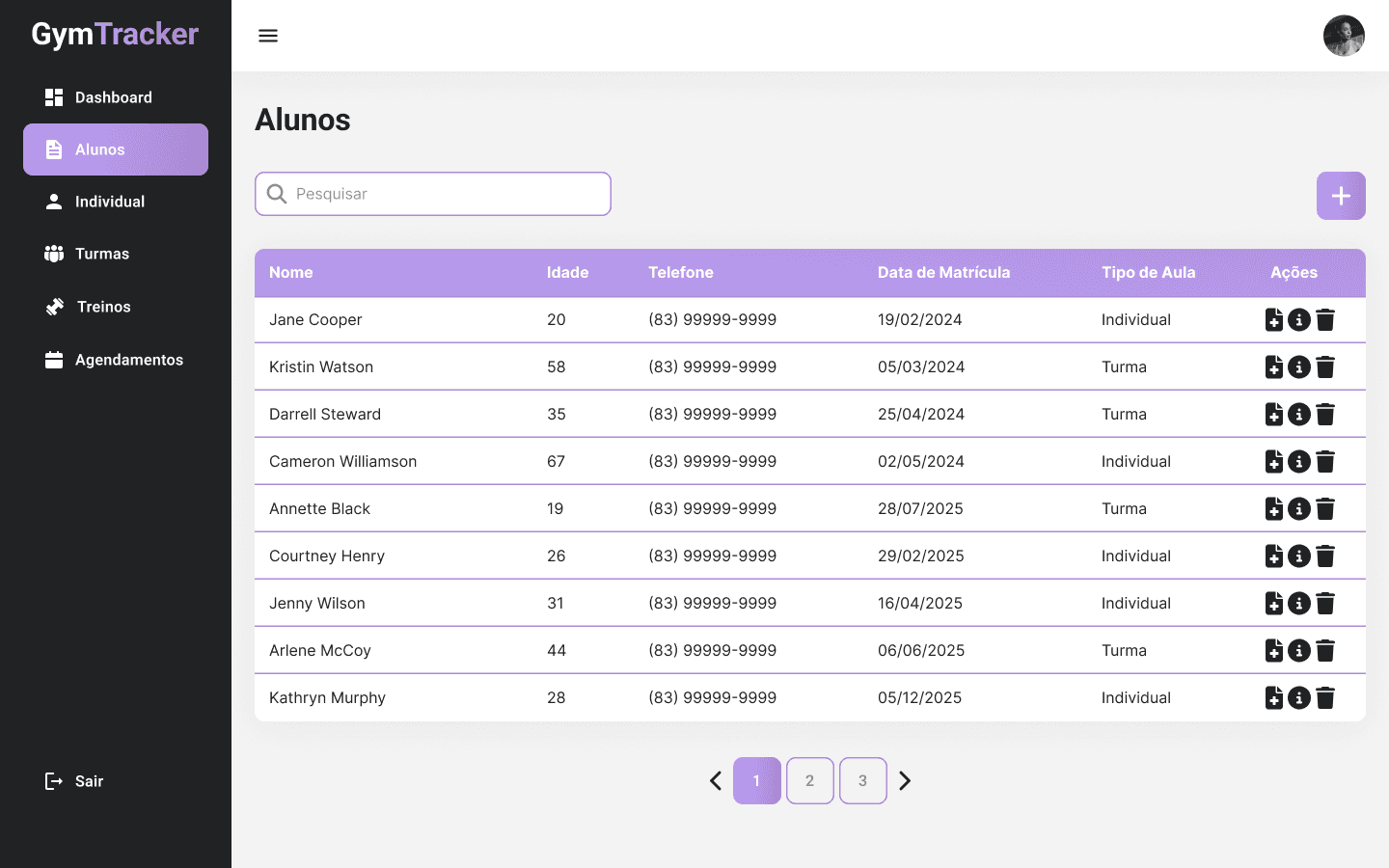
Informações | MFIT Personal | Next Fit | TecnoFit | EVO |
|---|---|---|---|---|
Público Alvo | Personal Trainers | Academias e Estúdios | Possui um app à parte para Personal Trainers | Academias e Estúdios |
Gerenciamento de Matrículas | Sim | Sim | Sim | Sim |
Agendamento de Aulas | Sim | Sim | Não informado | Sim |
Prescrição de Treinos | Pré-definidos ou personalizados | Pré-definidos ou personalizados | Pré-definidos ou personalizados | Pré-definidos ou personalizados |
Integração com Modelos de IA | Não informado | Criação de Treinos | Gestão de CRM | Não informado |
Solução
Uma plataforma de gestão completa (all-in-one) integrada com IA. Para otimizar o tempo e melhorar a tomada de decisões, o sistema utiliza o algoritmo Random Forest. Ao implementar modelos de regressão para analisar medidas corporais e modelos de classificação para categorizaar o Índice de Massa Corporal (IMC), a IA contribui diretamente para a recomendação de exercícios. Isso gera prescrições automazadas baseadas em dados, garantindo um acompanhamento mais eficiente, personalizado e seguro do progresso do aluno.
O Processo Criativo e de Desenvolvimento
1. Empatia e Pesquisa de Usuários
Começamos estudando de perto os aplicativos de gestão existentes, como funcionam e como são construídos. Mais importante ainda, conduzimos entrevistas e testes de usabilidade com personal trainers reais para entender quais pontos de dados eram essenciais para o fluxo de trabalho diário deles.
2. Design da Interface
Com base na pesquisa, prototipei a solução no Figma, focando em uma interface intuitiva e funcional.
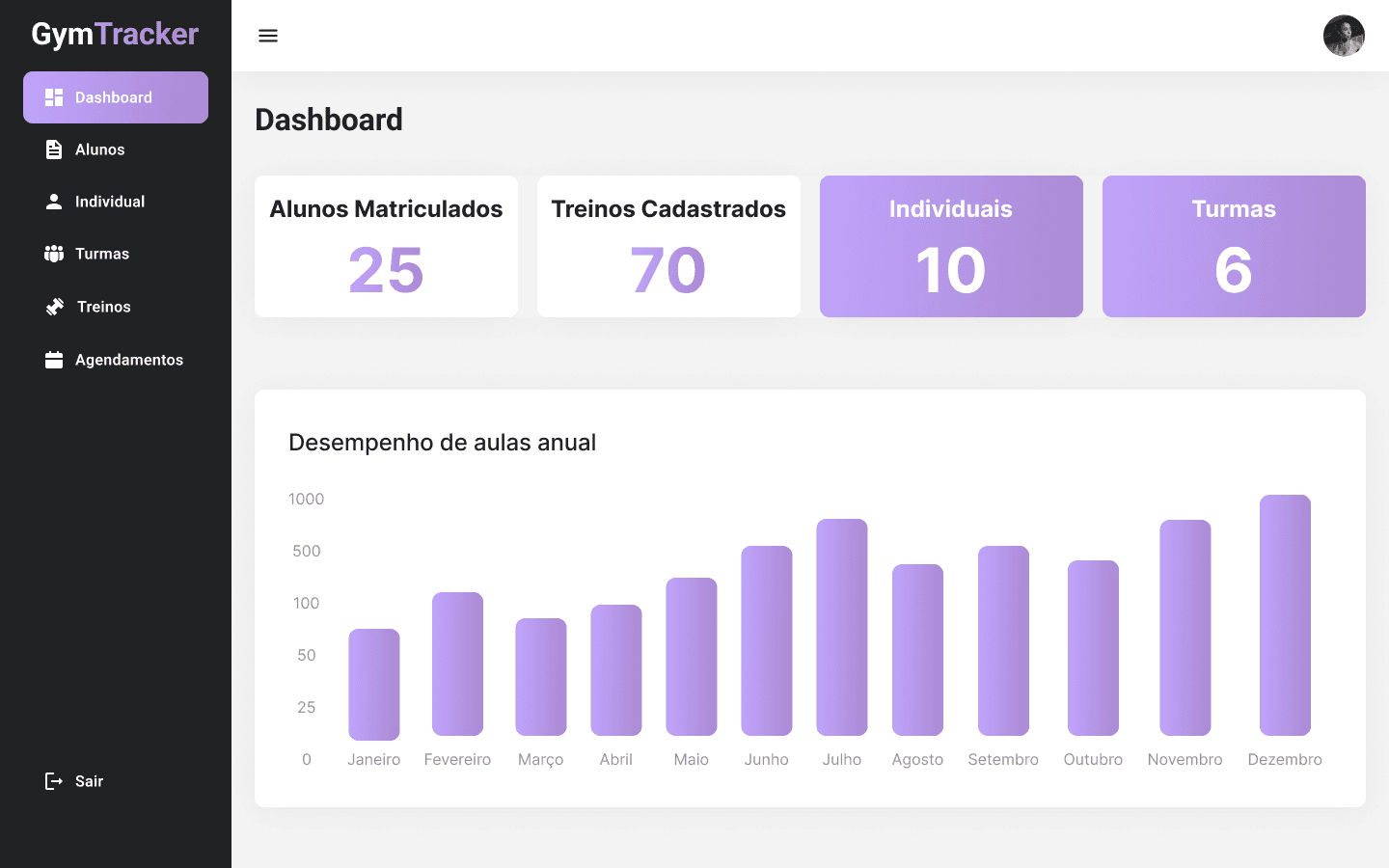
Dashboard: Criamos um painel principal destacando as informações essenciais de relance, permitindo que os treinadores naveguem facilmente entre a gestão de alunos e as agendas de aulas.
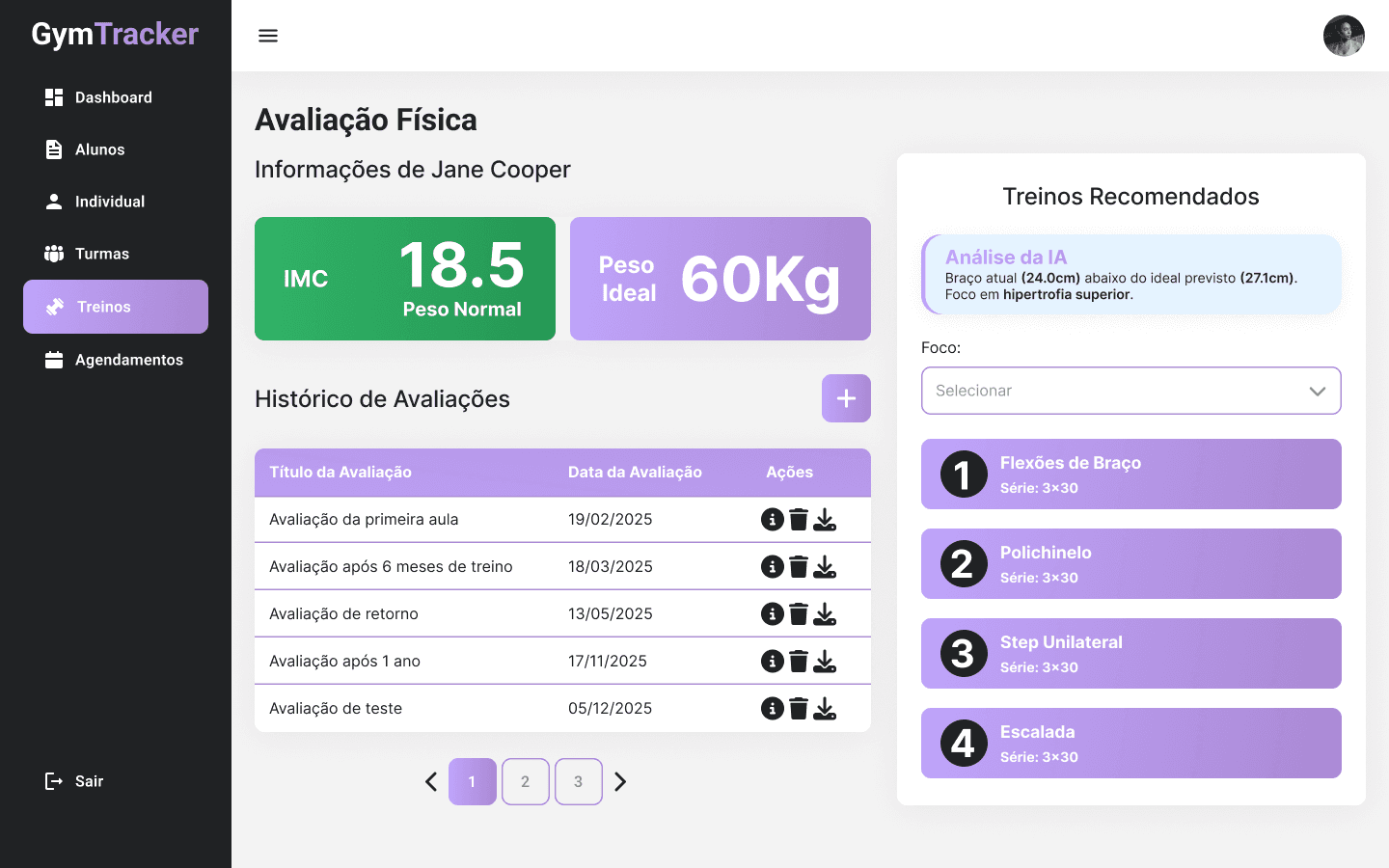
Otimização das Avaliações Físicas: Para resolver o principal problema descoberto durante a pesquisa, projetamos uma tela de avaliação específica com cards de visualização rápida contendo informações cruciais, como IMC e peso ideal. Essa hierarquia visual melhorou a usabilidade e o fluxo de trabalho dos profissionais.
3. Integração e Lógica da IA
O algoritmo Random Forest foi treinado para processar os dados inseridos nos formulários de avaliação física para gerar recomendações de treinos personalizados.
Resultados e Aprendizados
Este projetto foi uma experiência incrível que me permitiu unir minha formação em Ciência da Computação com minha paixão por Product Design. Ao ouvir diretamente os usuários finais (personal trainers), fomos capazes de entregar um produto digital que trabalha ativamente ao lado do profissional para proporcionar uma experiência personalizada para seus alunos.